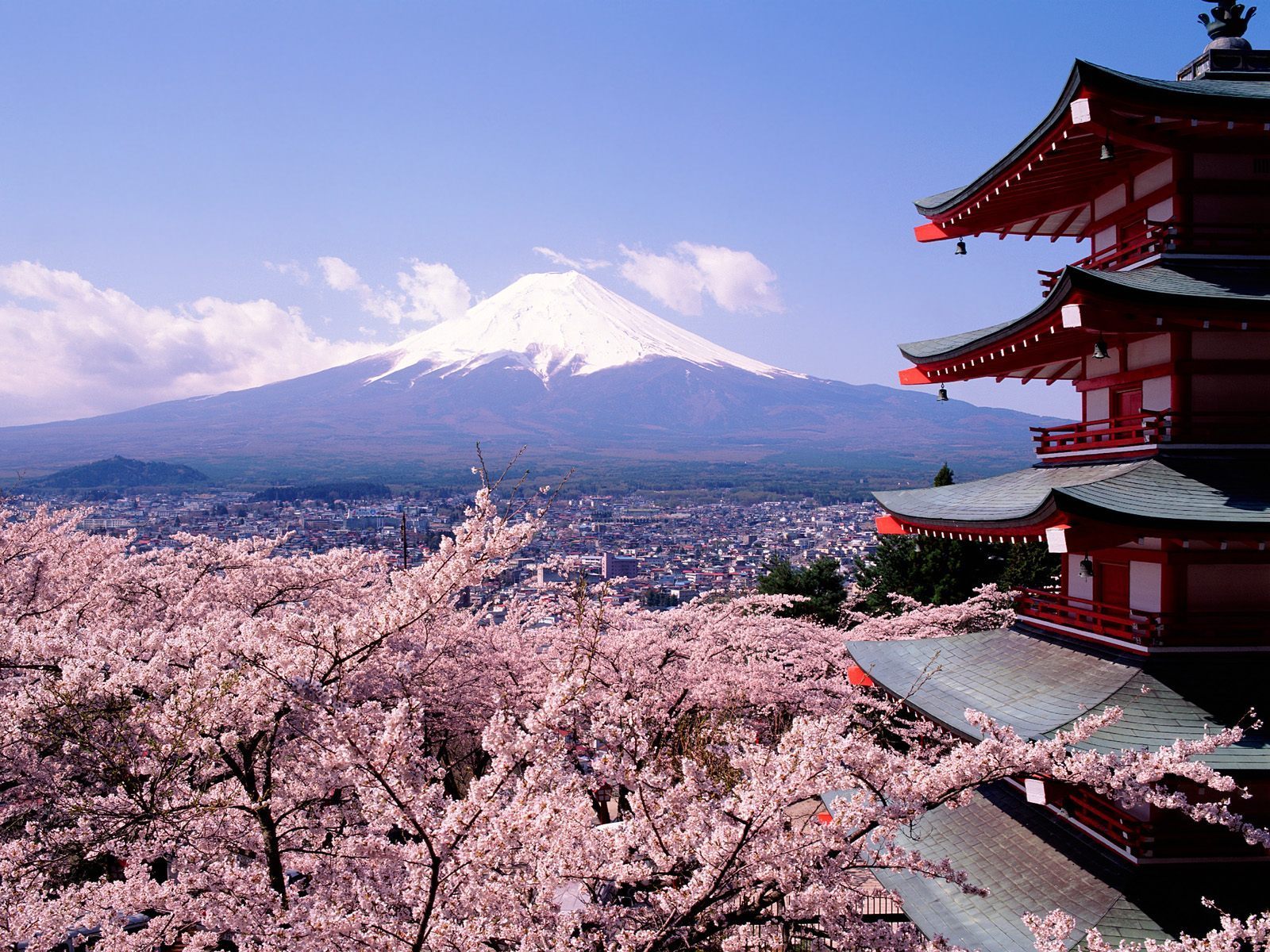
Monday, May 19, 2014

Summertime Sadness

As the school year comes to a close nostalgic feelings build.
It's been two years since I visited the island.
After I applied for a free trip and was accepted.
A group of students from Kennedy High School, Washington High School, and Jefferson High School.
We talked to a lot of tsunami survivors, which was especially influential for me as just three years earlier the Flood of 2008 took my home as hostage.
Traveling Japan will be an experience that I will never forget.
Akihabura 
Asakusa
The Golden Temple
Golden Poo
The Home Stay
Shinkansen
Riding the train
My Host Family
The friends I made 
#YOJO2012 (You Only Japan Once 2012)
The AMAZING museums
The smells 
The food
Collecting cool little things that the Japanese put in their magazines as little prizes
Shopping
I look back at my journey every day and I don’t regret a thing
I even learned some new vocabulary that I took back to the states with me.
I credit everything that has happened to me in relation to Japan to my Japanese teacher. Without him, I would have never been to Japan because he was the one who accepted me and recommended that I apply.
It may be a little muggy in the summer in Japan, but don’t let that scare you away. The amazing sites and adventures are worth a little sweat.
In just two short weeks I experienced a whole new culture and an extreme change in the way that I view other people and their beliefs.
I miss our unique hotels and the culture that they brought. We stayed in huts in a hotel in Fukushima Prefecture. There we were accommodated with cultural ceremonies and a truly amazing atmosphere. An early morning walk in the woods is an isolation from Japan. It transports you for a little bit back home. Nothing in the woods except the living is Japanese. There aren't any signs or Japanese characters. It's a relaxing walk that provokes many thoughts. Taking in everything around you is a hard task and I miss those mornings of solitude in the forest.
I guess my only critique of the trip was that I didn’t take more pictures…
Visiting Japan in the summer is a rewarding opportunity.
If any of you get a chance you should go and visit.
Hopefully this blog has made you want to explore more about Japanese culture and activities.

Sunday, May 18, 2014

Kimono

The kimono is a Japanese traditional garment. The word "kimono", which literally means a "thing to wear" (ki "wear" and mono "thing"), has come to denote these full-length robes. The standard plural of the word kimono in English is kimonos, but the unmarked Japanese plural kimono is also sometimes used.
Kimono are T-shaped, straight-lined robes worn so that the hem falls to the ankle, with attached collars and long, wide sleeves. Kimono are wrapped around the body, always with the left side over the right (except when dressing the dead for burial) and secured by a sash called an obi, which is tied at the back. Kimono are generally worn with traditional footwear and split-toe socks.
Today, kimono are most often worn by women, and on special occasions. Traditionally, unmarried women wore a style of kimono called furisode, with almost floor-length sleeves, on special occasions. A few older women and even fewer men still wear the kimono on a daily basis. Men wear the kimono most often at weddings, tea ceremonies, and other very special or very formal occasions. Professional sumo wrestlers are often seen in the kimono because they are required to wear traditional Japanese dress whenever appearing in public.

Kimonos for men should fall approximately to the ankle without tucking. A woman's kimono has additional length to allow for the ohashori, the tuck that can be seen under the obi, which is used to adjust the kimono to the wearer. An ideally tailored kimono has sleeves that fall to the wrist when the arms are lowered.

 Traditionally, kimonos are sewn by hand; even machine-made kimonos require substantial hand-stitching. Kimono fabrics are frequently hand-made and -decorated. Techniques such as yuzen dye resist are used for applying decoration and patterns to the base cloth. Repeating patterns that cover a large area of a kimono are traditionally done with the yuzen resist technique and a stencil. Over time there have been many variations in color, fabric and style, as well as accessories such as the obi.

Basic Parts of a Kimono
·         Dōura: upper lining on a woman's kimono.
·         Eri: collar.
·         Fuki: hem guard.
·         Sode: sleeve below the armhole.
·         Obi: a belt used to tuck excess cloth away from the seeing public.
·         Maemigoro: front main panel, excluding sleeves. The covering portion of the other side of the back, maemigoro is divided into "right maemigoro" and "left maemigoro".
·         Miyatsukuchi: opening under the sleeve.
·         Sode: sleeve.


Monday, May 12, 2014

Pachinko

Pachinko is a mechanical game originating in Japan and is used as both a form of recreational arcade game and much more frequently as a gambling device, filling a Japanese gambling niche comparable to that of the slot machine in Western gaming. A pachinko machine resembles a vertical pinball machine, but has no flippers and uses a large number of small balls. The player fires balls into the machine, which then cascade down through a dense forest of pins. If the balls go into certain locations, they may be captured and sequences of events may be triggered that result in more balls being released. The object of the game is to capture as many balls as possible. These balls can then be exchanged for prizes. Pachinko machines were originally strictly mechanical, but modern ones have incorporated extensive electronics, becoming similar to video slot machines.
Pachinko parlors are widespread in Japan, and they usually also feature a number of slot machines (called pashislo or pachislots); hence, these venues operate and look similar to casinos.
Modern pachinko machines are highly customizable, keeping enthusiasts continuously entertained.
Gambling for cash is illegal in Japan. Balls won cannot be exchanged directly for money in the parlor. The balls are exchanged for tokens or prizes, which are then taken outside and exchanged for cash at a place nominally separate from the parlor.
The payout mode lasts for a number of rounds. During each round, amidst more animations and movies playing on the center screen, a large payout gate opens up at the bottom of the machine layout and the player must try to shoot balls into it. Each ball that successfully enters into this gate results in a large number of balls being dropped into a separate tray at the bottom of the machine, which can then be placed into a ball bucket.


Pachinko machines vary in several aspects, including decoration, music, modes and gates. The majority of modern machines have an LCD screen centered over the main start pocket. The game is played with keeping the stream of balls to the left of the screen, but many models will have their optimized ball stream to be in the center of the play field or to switch from left side to right side depending on the game mode. Vintage machines vary in pocket location and strategy with the majority having a specific center piece that usually contains win pockets.

Thursday, May 8, 2014

Crime: A Tale of Two Guns (Literally)

American gun control policies are the least developed in the world. In a country of school shootings and movie theater brutality, it is easy to assume every other country has the same crippling issues deterring their development. However, not every country is like America. Because of Japanese cultural influences and laws, Japan is one of the most crime-free countries in the world. Japanese culture suggests that everyone should love their neighbor (something that is taught in America, but not enforced). 
Japan’s crime rate is extremely low. According to japantimes.co.jp, “Recently released figures from the Organization of Economic Cooperation and Development showed that only 1.4 percent of people in Japan had been victims of assault compared with the OECD average of 4.0 percent for annual assault and mugging rates.” Japan has also recently been ranked the safest country in the WORLD, with the second lowest homicide rate after Iceland and the second lowest assault rate after Canada.
A lot of young children travel alone on the subway daily unaccompanied by a parent or guardian, but nobody is tempted… Astonishingly, Japanese culture has beliefs that individuals should do things that directly affect the good of the whole and not that individual.
WHY IS THE CRIME RATE SO LOW?
Well, partly because of Japan’s gun control policies. Besides the police and the military, the only group that is allowed to have guns is hunters. This makes for an easily check able system for police to monitor the sale and re-sale of guns and other weapons. These rules ensure that virtually no one in Japan possesses a gun! It is virtually a gun free society.
For those who are wondering why America can’t implement some of Japan’s policies towards gun control, it isn't as easy as it sounds. Americans have much more guns than the Japanese ever did and (unlike the Japanese) Americans seem determined to keep their weapons.
BUT WHAT ABOUT ILLEGAL IMPORTS?
It doesn't take a genius to see that Japan is in fact an island. So, it is easy for the Japanese to seal their borders against illegal gun imports.
It’s so amazing to think that in a country with so many people and so many busy cities and sites that the crime rate is so low because people are thinking. Imagine what the United States would be like if starting today everyone did something for the country, rather than just themselves.


Monday, May 5, 2014

Doritos, KitKats, and Ice Cream OH MY!

Back when I was in Japan, I couldn't help but notice some peculiar items on the racks of stores and shops that I went to. Various things from bizarre t-shirts to crazy sculptures of golden poo, but the most crazy thing that I noticed while shopping in Japan (especially in convenience stores), was the different amounts of bizarre flavors that the Japanese have for candies and other foods. I have already blogged about my wonderful discovery, Melon Bread, which changed my views about simple breads that I knew and opened me up to a world of new culture with Japanese tasty treats. 

Doritos. Doritos were first placed in Japanese stores in the 1980s (in America in the 1960s) and were typically sold in the original nacho cheese flavor, but as the chip manufacturer grew it began to test some of it's more creative ideas out on Japan. Most of the bizarre flavors are for "limited time only" but that doesn't mean that they didn't leave an impact of Japan. A lot of the flavors given the green light in Japan are often then produced and sold in America. 
Some bizarre Doritos flavors I witnessed were:
garlic and anchovy
mayonnaise 
smoked bacon
wasabi
chicken
and even green tea!!

Similar to Doritos, KitKats have also been given some weird or different flavors. The Japanese have turned my knowledge of snack time into a crazy mixed up world with fruity, drink, and spicy flavors.... OF KITKATS!!! Every chocolate lover should indulge in some of these interesting flavors. 
Some bizarre KitKat flavors I witnessed were:
Strawberry
Edamame
Cinnamon Cookie
Apple
Green Tea
and WASABI! (Chocolate and wasabi...? Hmmm. When I tried it, it smelled like horseradish, which is not a smell I would enjoy from a chocolate treat. It's wasabi plus sweetness, which combined into a well-engineered taste in my mouth (THANK YOU NESTLE). Eating wasabi commonly is conveyed as a very spicy event. With the KitKat I didn’t feel the heat, but really, I tasted the heat.)

If I mentioned vanilla ice cream (soft cream) to a Japanese person they would probably assume (accurately) that a) I am American, and b) I am inexperienced... Japan has also skewed my previous interpretation of desserts in America. A handful of American ice cream parlors have attracted attention in recent years for interesting ingredients that range from bourbon and cornflakes to habanero peppers, but these don’t even come close to the internationally known flavors found in Japan.


TODAY IS THE DAY FOR CHILDREN

Children's Day (Kodomo no hi) is a national Japanese holiday which happens every year on May 5 and is part of the Golden Week.  It was designated a national holiday by the Japanese government in 1948 as a day honored to respect children's personalities and to celebrate their happiness.

Until recently, Tango no Sekku was known as Boys' Day (otherwise known as the Feast of Banners) while Girls' Day (Hinamatsuri) was celebrated on March 3. In 1948, the government said that this day was to become a national holiday to "celebrate the happiness of all children and to express gratitude toward mothers." It is now called Kodomo no Hi.

The day was originally called Tango no Sekku and was celebrated on the 5th day of the 5th MOON in the lunar calendar (instead of the fifth month) or Chinese calendar. The reason for the date change was Japan's switch to the Gregorian calendar. The festival is still celebrated in China as well as Japan. It was originally just for boys but has since been changed to include both boys and girls as modernism has crept into the world.

Although it is not known precisely when this day started to be celebrated, it was probably during the reign of the Empress Suiko. In Japan, Tango no Sekku was assigned to the fifth day of the fifth month after the Nara period.


Usually during the Golden Week*, when this holiday takes place, families raise carp-shaped flags (koinobori) because of the Chinese legend that when a carp swims upstream it becomes a dragon (and the wind blowing the flags makes them appear to be swimming). Typically, one flag is hung for each child (traditionally only boys were represented) as well as a Kintarō doll usually riding on a large carp, and the traditional Japanese military helmet, kabuto, these two items are symbols of strong, energetic, and healthy boys in the family.

Mochi rice cakes (kind of a dense rice past) wrapped in oak leaves (kashiwa-mochi) is traditionally served on this day.

*Golden Week:
Today, this week is celebrated by a lot of Japanese taking paid time off of work during this week. Some business are even closed down completely! Well deserved, Golden Week is the longest vacation period of the year for a lot of Japanese people. This holiday week is also a common time for a lot of Japanese families to travel around the world (typically to surrounding islands or the United States).

Monday, April 28, 2014

Lunch

Bento is a single-portion takeout or home-packed meal common in Japanese cuisine. A traditional bento holds rice, fish or meat, with pickled or cooked vegetables, usually in a box-shaped container. Bento boxes are readily available in many places throughout Japan, including convenience stores, bento shops, railway stations, and department stores. However, Japanese homemakers often spend time and energy on a carefully prepared lunch box for their spouse, child, or themselves.

Bento can be elaborately arranged in a style called "kyaraben" ("character bento"). Kyaraben are typically decorated to look like popular characters from Japanese cartoons (anime), comic books (manga), or video games. Another popular bento style is "oekakiben" or "picture bento". This is decorated to look like people, animals, buildings and monuments, or items such as flowers and plants. Contests are often held where bento arrangers compete for the most aesthetically pleasing arrangements.


In Japan, school lunch means a regular meal, not one that harms your health. The food is grown locally and almost never frozen. There’s no mystery in front of the meat. From time to time, parents even call up with an unusual question: Can they get the recipes?

Japan takes seriously both its food and its health and, as a result, its school lunches are a point of national pride — not a source of dismay. As other countries, including the United States, struggle to design school meals that are healthy, tasty and affordable, Japan has all but solved the puzzle, using a system that officials here describe as utterly common sense.

In the United States, where obesity rates have tripled over the past three decades, new legislation championed by Michelle Obama has pushed schools to debut menus with controversial calorie restrictions. But even the healthiest choices are generally provided by large agri-food companies, cooked off site, frozen and then reheated, and forced to compete in cafeterias with all things fried, salty and sweet.

Schools in Japan, by contrast, give children the sort of food they’d get at home, not at a stadium. The meals are often made from scratch. They’re balanced but hearty, heavy on rice and vegetables, fish and soups. The meals haven’t changed much in four decades.

Mealtime is a scene of communal duty: In both elementary and middle schools, students don white coats and caps and serve their classmates. Children eat in their classrooms. They get identical meals, and if they leave food untouched, they are out of luck: Their schools have no vending machines. Barring dietary restrictions, children in most districts can’t bring food to school, either, until they reach high school.

The Way of Tea

The Japanese tea ceremony, also called the Way of Tea, is a Japanese cultural activity involving the ceremonial preparation and presentation of matcha, powdered green tea. In Japanese, it is called chanoyu or sadou, chadou. The manner in which it is performed, or the art of its performance, is called otemae. Much less commonly, Japanese tea ceremony uses leaf tea, primarily sencha, in which case it is known in Japanese as senchadō as opposed to chanoyu or chadou. 


The Japanese tea ceremony, or sadou came about when Japan adopted both Chinese practices of drinking powdered green tea and Zen Buddhist beliefs.  In the 1500s, Sen No Rikkyu incorporated the ideas of simplicity and that each meeting should be special and unique into the tea ceremonies.  The traditional Japanese tea ceremony became more than just drinking tea; it is a spiritual experience that embodies harmony, respect, purity and tranquility.


The host of the tea ceremony may prepare extensively for the event, practicing hand movements and all steps so that the ceremony is perfect, yet simple in every detail. The ceremony can be performed in the home, a special tea room, in a tea house, even outdoors. 


Before a Japanese tea ceremony begins, guests may stay in a waiting room until the host is ready for them.  The guests will walk across roji, Japanese for dewy ground, symbolically ridding themselves of the dust of the world in preparation for the ceremony.  Then, the guests will wash their hands and mouths from water in a stone basin as a last purifying step. 


The host presents the prepared tea bowl to one of the guests and they exchange bows.  This first guest admires the bowl then rotates it before taking a drink.  The guest wipes the rim of the tea bowl then offers it to the next guess who repeats these movements. 


It can take years of practice to master the art of Japanese tea ceremonies.  In Japan, many choose to take classes or join clubs at dedicated tea schools, colleges, or universities.  Students learn the common hosting duties such as how to properly enter and exit the tea room, when to bow, making the tea correctly, proper placement and cleaning of the utensils and equipment, as well as appropriate guest behavior like handling and drinking from the tea bowl.  

Monday, April 21, 2014

Pearl Harbor

Attack on Peral Harbor
As Hitler continued to conquer Europe, with Paris falling in June 1940, the United States struggled to maintain polite relations with Japan. Japanese forces remained in China and were poised to take French Indochina, which prompted Franklin Delano Roosevelt to cut Japan from U.S. raw materials. As an island nation with few natural resources, the Japanese relied heavily on imports of American oil. Hoping to secure the removal of Japanese troops from China and Indochina in return for lifting the embargo, FDR sent Secretary of State Cordell Hull to negotiate with the Japanese government. Among the negotiations, the new Japanese leader General Hideki Tojo Changed course unexpectedly and backed out. Little did Hull know that the general was planning a secret attack on the Pacific fleet that he hoped would cripple the United States.


On December 7, 1941 the entire U.S. Pacific fleet was attacked at Pearl Harbor, Hawaii, in the early morning hours. The surprise attack killed 2,400 American sailors and wounded 1,200. Eight battleships were either sunk or severely damaged, including the USS Arizona, which lost 1,100 sailors. Ten other ships were severely damaged and almost 200 planes destroyed in the attack. Immediately, FDR asked Congress to declare war on Japan, and it responded with but one dissenting vote. Three days later, Germany and Italy responded by declaring war on the United States.

The attack on Pearl Harbor set off an intense rampage within the United States. Japanese people were now the subject of extreme persecution. Japanese were constantly made fun of, bullied, and even violated through physical violence. Actions even went as far as gathering up all of the Japanese and putting them into internment camps. Personally, I think that this is similar to the concentration camps that the United States were trying to get rid of in Germany. Way to go America.

The attack was very controversial at the time. As you can imagine, people were on both sides of this highly debated topic. In the end, Japan and America set aside their differences when dealing with an even more bitter topic. Communism. Today, signs of Japanese friendship can be seen at the nations Capitol where Hanami trees were planted (See blog on Flower Viewing). Today, the USS Arizona Memorial can be visited by boat on the island. In the United States, a holiday known as Pearl Harbor Day is now celebrated and remembered on December 7th.

Sunday, April 20, 2014

Stereotypes

Asians can't drive
Slant eyes
Japs
Asians are smart
Ching chong
OoooOoooOooo AMERICANS
Sushi lovers
Eat, Love, RICE
Chopstick
KFC
Fish are friends and food
American wannabes
JPOP AMERICAN FUN TIME NOW!!!

Some true, some false, most offensive. Asian stereotypes and especially Japanese stereotypes have shaped our culture and beliefs. Without these stereotypes perhaps the Japanese would not have been persecuted throughout American history.

The Japanese are actually very skilled drivers. The roads are narrower and much more busy than they are in the United States and there are rarely any crashes in Japan. Really aren't Americans the bad drivers? From my travels in Japan I can tell you that Japan's traffic is insanely ridiculous, but there aren't a lot of crashes. I didn't see any in my two weeks of being there.

Yes they have squinty eyes, but does that make them a target for persecution. Well, judging by today's crude Asian humor, you'd say yes.

Following Japanese military disputes in the twentieth century a derogatory term for the Japanese was created. Jap was the lowest of the low a person could call a human of Japanese dissent.

Ching chong isn't even Japanese... so.. it's Chinese. In the Japanese language it is impossible to have an "ng" together to make that ting, ring, sling, sound.

It's true. Many Japanese people LOVE Americans and American culture. Some even try to change their appearance to look more like an American (skin color and hair color).

Again, most of the meals that the Japanese consume consist mostly of rice and fish and are almost always eaten with chopsticks (with the exception of Western meals). In Japan, I never touched a fork and the Japanese were always surprised at how I could use my chopsticks with my left hand!

On Saturday Night Live, a reoccurring skit has surfaced called J-Pop American Fun Time Now. It has all of the cheesy elements of a Japanese television show like musical numbers, insane costumes, and weird guests. A lot of Japanese shows are this strange and different to Americans and some words and phrases (however inappropriate and wrong their uses) are correct. Please consider watching this clip, http://vimeo.com/30767628 to view the stereotypes played out in this skit.


Monday, April 14, 2014

Say Cheese!

カメラ
Kamera
Camera
Japan is host to a large amount of retail camera stores and camera attractions that specialize in the production, sale, and home of Japan's camera market. 

People from all over the world go to Japan to experience this huge camera hub. Because of its multilevel department stores that specialize in camera retail, it is an obvious spot for a camera hotspot. Most camera companies like Sony, Nikon, and Fujifilm have their cameras produced in Japan because of Japan's camera reputation. Serveral European camera industries also have their cameras produced in Japan. 

Cameras in America typically only are manufactured in one or two colors but cameras in Japan come in hundreds of different colors. It is common to see one camera store featuring a camera in all of the colors it comes in. These new colorful cameras appeal to women because they are light and compact. However, Japan's DSLR camera market is expanding rapidly! These cameras are often the main feature in camera markets in Japan. 

Markets not only feature new and impressive camera, but several vintage cameras as well. In fact, Japan is one of the most common place for people around the world to buy their vintage cameras, too. The older cameras attract a lot of avid photographers and inspire many younger people to get into photography. These cameras also allow for us to look into Japan's camera history and see the progression Japan has made in the camera market over decades of production. 

As one of the photography hubs of the world, you can buy just about anything made for a camera here. There are three approaches to take when searching for a camera in Japan. One, obviously, is to go to a camera shop. The second choice is to visit one of the large chain stores. The last is to go to Akihabara in Tokyo. Practically anything that runs on electricity is sold in Akihabara. The majority of electronics produced here are not even exported. Unlike in most other shops in this country, bargaining is expected here. Most large stores in Akihabara cater to tourists, meaning there are duty-free floors and salesmen who speak foreign languages. Akihabara is also home to many of Japan's nerd population which makes it an ideal place to sell electronics as well as cameras. 

Thus, Japan is host to a large amount of retail camera stores and camera attractions that specialize in the production, sale, and home of Japan's camera market. 


Sunday, April 13, 2014

Cuisine

Tsukiji Market (築地市場, Tsukiji Shijō) is a large wholesale market for fish, fruits and vegetables in central Tokyo. It is the most famous of over ten wholesale markets that handle fish, meat, produce and flowers in Tokyo. Tsukiji Market is one of the world's largest fish markets, handling over 2,000 tons of marine products a day. The sight of the many kinds of fresh fish and other seafood and the busy atmosphere of scooters, trucks, sellers and buyers hurrying around, make Tsukiji Market a major tourist attraction. The numbers of visitors has increased so much over recent years, that they have become a problem to the course of business, as the aging market was not anticipated to serve as a tourist spot. In order to avoid interference with business, different rules should be followed when visiting the different areas of the market. 


Tsukiji Market consists of an inner market where most of the wholesale business and the famous tuna auctions take place, and an outer market whose retail shops and restaurants carter to the public. A few restaurants are also found in the inner market. The wholesale area consists of hundreds of small stands in a large, crowded hall, where buyers and sellers hurry along narrow lanes with their carts and trucks. It is an exciting area for tourists to view and photograph the fish and the action, but it is also an area where tourists are likely to interfere with the professionals working there.

The number of visitors to the tuna auction is limited to 120 per day, the maximum number which the market's infrastructure can accommodate. Tourists, who wish to see the auction, have to apply at the Osakana Fukyu Center (Fish Information Center) at the Kachidoki Gate, starting from 5:00am on a first-come, first-serve basis (may start earlier on busy days). A first group of 60 visitors will be admitted to the auction between 5:25 and 5:50, while a second group of 60 visitors will be admitted between 5:50 and 6:15.


On busy days, visitors start lining up long before 5am, and the maximum number is likely to be exceeded, in which case later arriving visitors will not be able to see the auction. Successful applicants will be able to view the auction from a designated visitor area. It is not allowed to view the auction from anywhere else or to use flash photography or to interfere with the business action in any other way.

Monday, April 7, 2014

"Life As I Knew It Was Gone"

On Friday, March 11 of 2011 a span of six minutes changed the course of life in Japan. A massive 9.0 earthquake shook the globe and resulted in a devastating tsunami. 10,583 aftershocks were still being felt almost three years after the disastrous quake, while life hasn't been fully restored. Buildings crumbled despite Japan's modern infrastructure of allowing buildings to withstand earthquakes. The tsunami waves rushed through eastern Japan creating landslides, flooding, building and infrastructure damage, and most toxic of all, the nuclear damages. 

The main site of the nuclear accidents were the Fukushima power plants. Japan declared a state of emergency following the failure of the cooling system at the Fukushima Daiichi Nuclear Power Plant, resulting in the evacuation of nearby cities. Officials reported that radiation levels inside the plant were up to 1,000 times the normal levels, and that radiation levels outside the plant were up to 8 times the normal levels. Later, a state of emergency was also declared at the Fukushima Daini Nuclear Power Plant about seven miles south. It was reported that radioactive iodine was detected in the tap water in Fukushima, Tchigi, Gunma, Tokyo, Chiba, Saitama, and Niigata, and radioactive cesium, iodine, and strontium were also detected in the soil in some places in Fukushima.


The tsunami wave disrupted many lives of the Japanese. Buildings were destroyed, homes were leveled, and agriculture fields were depleted. There was no warning for this huge wave. Families sought refuge on roofs of tall building, but often it wasn't enough. When running to the safety zones many people were caught in the wave and swept away. Thousands were killed, injured, or reported missing. Some were trapped in cars or hidden beneath the water. In my travels to Japan I spoke to an elderly (around 90 years old) woman who lived in the demolished Fukushima prefecture. Tears streamed from her eyes as she explained to us that she was told that the place where she lived could not be entered for another 20 years. This meant, she told us, "I will not be able to go back to the place where I lived until I am 110..." She then broke down, crying, because after she was told that she realized that she would never be able to enter the house that she had made a living in again. 

"Life as I knew it was gone..."


Tuesday, April 1, 2014

Flower Viewing


Hanami, or literally the act of viewing flowers in English, is the Japanese traditional way of enjoying the awe-inspiring beauty of flowers. In this case, the flowers that are viewed are almost always cherry blossoms, sakura in Japanese, or plum blossoms, ume in Japanese. From the end of March to early May, sakura bloom all over Japan, and around the first of February on the island of Okinawa. The blossom forecast, sakura zensen in Japanese meaning literally cherry blossom front, is announced each year by the weather stations, and is watched carefully by those planning hanami as the blossoms only last a week or two. In modern-day Japan, hanami mostly consists of having an outdoor party or picnic with lots of friends and family or even random other hanami viewers that were met on the travel to hanami beneath the sakura during the day or at night. The hanami celebrations usually involve eating and drinking, and playing and listening to music. Some special dishes are prepared and eaten at the occasion, like dango and bento, sake is commonly drunk as part of the festivity.


Hanami at night is called yozakura, night sakura in Japanese. In many places such as Ueno Park temporary paper lanterns are hung for the purpose of yozakura. On the island of Okinawa, decorative electric lanterns are hung in the trees for evening enjoyment, such as on the trees ascending Mt. Yae, near Motobu Town, or at the Nakijin Castle

A more older form of hanami also exists in Japan, which is enjoying the plum blossoms, or ume in Japanese, instead, which is narrowly referred to as umemi, plum viewing in English. This kind of hanami is popular among old generations of people, because they are more calm than the sakura parties and gatherings, which usually involve younger people and can sometimes be very crowded and noisy.


 Hanami festivities have become popular outside of Japan as well, and are now also celebrated in other countries. Smaller hanami celebrations take place in Taiwan, Korea, the Philippines, and China. Hanami also has become popular in the United States. In 1912, Japan gave 3,000 sakura trees as a gift to the United States to celebrate the nations' friendship. These trees were planted in Washington D.C., and another 3,800 trees were donated in 1965. These sakura trees continue to be a popular tourist attraction, and every year, the National Cherry Blossom Festival takes place when they bloom in early spring.

Thursday, March 27, 2014

Sports

Major Sports


Baseball is one of the most popular spectator sports in Japan. There are 12 professional baseball teams, six in the Central League and six in the Pacific League. The teams in each league play about 140 games each during the season, at the end of which the two league winners meet in the Japan Series. Student baseball is also popular, and many kids play the game through local Little Leagues or school baseball clubs. (See "School Clubs" post) 


Since Japan's own professional soccer league, J. League, was founded in 1993, soccer has won more and more fans in Japan. The 2002 FIFA World Cup was cohosted by Japan and the Republic of Korea, and this has greatly increased the popularity of soccer. Many Japanese players have joined overseas teams and play in the top European leagues. Japan also has women's soccer leagues, in which most of the players are amateurs. The Japanese women's national team, in the 2012 London Olympics, won the silver medal. This has helped raise the profile of women's soccer in Japan and increased the player population.


Martial Arts


Traditional martial arts, such as judo, kendo, karate-do, and aikido, thrive in modern Japan thanks to the devotion of those who practice them. 
In judo, which literally means "the gentle way," the key to overcoming an opponent lies in taking advantage of their strength. Now popular all over the world, judo has firmly established itself as an official Olympic event since its first inclusion in the Games in 1964. Following in the footsteps of judo, kendo (Japanese fencing) has also succeeded in attracting a loyal overseas following in recent years. Kendo competitors wear armor-like protective gear and use bamboo swords to attack and defend. Karate-do came to Japan from China through the Ryukyu Kingdom (present-day Okinawa). Karate-do competitors do not wear any kind of protection and fight using only their hands and feet.


Sumo


Sumo, Japan's national sport, has a history spanning more than 1,000 years. As it used to be held as a way of giving thanks for harvests, sumo still involves many rituals. Rikishi (sumo wrestlers), whose hair is styled like that of ancient warriors, wear only a special silk belt and fight using only their bare hands. Most weigh between 100 and 200 kilograms. They fight in the 4.5-meter wide dohyo (ring) until one either leaves the ring or touches the ground with any part of his body other than the soles of his feet. While the rules are simple, the techniques are not, and there are more than 80 ways to win. Professional sumo tournaments take place six times a year and last 15 days each. Sumo has attracted attention outside Japan through exhibition tours to various countries and the success of wrestlers from overseas.


Tuesday, March 18, 2014

School Clubs

School clubs play a very influential role in Japanese schools. Between karate, baseball, or music clubs like band or choir it's up to the students to find their niche. Once they settle in their selected clubs it is their home for the rest of their high school career. It is very unusual to have a kid in more than one club. This would make it quite hard for me to decide because I am very active in marching band and show choir. If I went to a Japanese high school I'd have to choose.

In the club, students become very attached to each other and form life long friendships. As well as student bonding with other students, students often become extremely close with their instructors. It is common for a kid to feel like their instructor is a second parent of sorts.

Because students only have to be responsible for one club and their school work clubs meet a lot. Clubs typically meet everyday after school gets out and meet anywhere from two to three hours. Sometimes select clubs like baseball meet before school during tournament season. The practice schedule may seem rigorous but it is very doable and the coaches and instructors are very flexible. However, conflicts rarely arise because of one's sole dedication to that club.

In middle school, school clubs are taken a little more lightly. It is a place to test the waters and try all of the different clubs the student might be interested in before it's time to pick the student's home for their high school life. Before high school it is common that each high school has a club fare of sorts. At this club fare students from the high school attempt to lure the younger kids to join their clubs. Often this is the biggest recruiting event for the clubs and they get most of their membership at these fares. It is also a way for clubs to show off their achievements from the year in front of the other clubs and aspiring members of the clubs. This is also a rather good marketing strategy to gain membership.

In conclusion, clubs in Japan are used as a recruiting tool to get kids to come to the schools. They also teach kids a team dynamic and help develop strong bonds of friendship between students and other students as well as students and their instructors.

Tuesday, February 11, 2014

Beckoning Cat

The maneki-neko (literally "beckoning cat") is a common Japanese figurine or lucky charm, usually made of ceramic in modern times, which is often believed to bring good luck to the owner. The figurine depicts a cat beckoning with an upright paw, and is usually displayed—often at the entrance—in shops, restaurants, pachinko parlors, and other businesses. Some of the sculptures are electric or battery-powered and have a slow-moving paw beckoning. The maneki-neko is sometimes also called the welcoming cat, lucky cat, money cat, happy cat, or fortune cat in English.

Maneki-neko come in different colors, styles, and degrees of ornateness. Common colors are white, black, gold and sometimes red. In addition to ceramic figurines, maneki-neko can be found as keychains, piggy banks, air fresheners, house-plant pots, and miscellaneous ornaments, as well as large statues. Maneki-neko are sometimes mistakenly called the "Chinese lucky cat", as it is also increasingly popular among Chinese merchants.

Maneki-neko is the subject of a number of folktales.

The stray cat and the shop: The operator of an impoverished shop (or inn, tavern, temple, etc.) takes in a starving, stray cat despite barely having enough to feed himself. In gratitude, the cat takes up a station outside the establishment and beckons in new visitors, bringing prosperity as a reward to the charitable proprietor. Ever after, the "beckoning cat" has been a symbol of good luck for small business owners.

The nobleman-warning cat: One day a luminary passed by a cat, which seemed to wave to him. Taking the cat's motion as a sign, the nobleman paused and went to it. Diverted from his journey, he realized that he had avoided a trap that had been laid for him just ahead. Since that time, cats have been considered wise and lucky spirits. Many Japanese shrines and homes include the figurine of a cat with one paw upraised as if waving, hence the origin of maneki-neko, often referred to as kami-neko in reference to the cat's kami or spirit. Depending on version, the story may cast the nobleman as one of various Japanese emperors, as well as historical characters such as Oda Nobunaga and the samurai Ii Naotaka.

The old woman's cat: An old woman, living in Imado in eastern Tokyo, was forced to sell her cat due to extreme poverty. Soon afterwards the cat appeared to her in a dream. The cat told her to make its image in clay. She did as instructed, and soon afterward sold the statue. She then made more, and people bought them as well. These maneki-neko were so popular she soon became prosperous and wealthy.

Rub a Dub Dub

Sentō is a type of Japanese communal bath house where customers pay for entrance. Traditionally these bath houses have been quite easy to use, with one large room separating the sexes by a tall barrier, and on both sides, usually a minimum of lined up faucets and a single large bath for the already washed bathers to sit in among others. Since the second half of the 20th century, these communal bath houses have been decreasing in numbers as more and more Japanese residences now have baths. Some Japanese find social importance in going to public baths, out of the theory that physical proximity brings emotional intimacy, which is termed skinship in pseudo-English Japanese. Others go to a sentō because they live in a small housing facility without a private bath or to enjoy bathing in a spacious room and to relax in saunas or jet baths that often accompany new or renovated sentōs.
Another type of Japanese public bath is onsen, which uses hot water from a natural hot spring. They are not exclusive: A sentō can be called an onsen if it derives its bath water from naturally heated hot springs. A legal definition exists that can classify a public bathing facility as sentō.

There are many different looks for a Japanese sentō, or public bath. Most traditional sentō, however, have an entrance from the outside looks somewhat similar to a temple, with a Japanese curtain across the entrance.  The men's and the women's side are very similar and differ only slightly.

A public bathing facility in Japan typically has one of two kinds of entrances. One is the front desk variety, where a person in charge sits at a front desk, abbreviated as "front." The other entrance variety is the bandai style. In Tokyo,  sentō facilities have a "front"-type entrance, while only 315 still have the more traditional bandai-style entrance.
The dressing room also often has access to a very small Japanese garden with a pond, and a Japanese-style toilet. There are a number of tables and chairs, including some coin-operated massage chairs. Usually there is also a scale to measure weight, and sometimes height. Local business often advertises in the sentō. The women's side usually has some baby beds, and may have more mirrors. 

Taking a bath at a public sentō requires at a bare minimum a small towel and some soap/shampoo. Attendants usually sell these items for 100-200 yen. Many people bring two towels; a handtowel for drying and a handtowel or washcloth for washing. A nylon scrubbing cloth or scrub brush with liquid soap is normally used for washing. Other body hygiene products may include a pumice stone, toothbrush, toothpaste, shaving equipment, combs, shower caps, pomade, make up products, powder, creams, etc. Some regular customers store their bucket of bathing equipment on open shelves in the dressing room.

Tuesday, February 4, 2014

Dragons

There are dragons of all different shapes and sizes. There’s the big, European dragons with their hulking bodies, expansive wing span, and fire breath, and then there are the Asian style dragons which are a good bit different. And then there is the Japanese dragon, a unique dragon that many would recognize as being an Asian dragon. The dragon has significant meaning in Japanese culture as well. When most westerners picture a dragon, they’ll think of the European style dragons with their big wings and fire breath. Japanese dragons are quite different. Japanese dragons, and Asian dragons in general, are much more serpentine than their European counterparts. Japanese dragons also only have three claws on each foot, and don’t fly as often as they lack wings.

The Japanese believe that Asian dragons originated in Japan and as they spread to other areas of Asia, gained more toes through evolution or something. China and Korea hold just the opposite to be true. They believe that Asian dragons originated in their country, then lost toes as they moved themselves over to Japan. Japanese dragons combine native legends with dragon stories from China, Korea, and India. Like these other Asian dragons, most Japanese dragons are associated with rainfall and bodies of water. They are regarded as water deities and are not associated with fire in the way their European cousins are.


Dragon lore is associated with both Shinto shrines and Buddhist temples. There are many legends of famous dragon deities inhabiting ponds, lakes, and rivers near these shrines and temples.
Temple names also frequently have something to do with dragons. For example, there is the Rinzai sect’s Tenryuji (Heavenly Dragon Temple), Ryutakuji (Dragon Swamp Temple), and Ryoanji (Dragon Peace Temple). The Kinryu no Mai (Golden Dragon Dance) is an annual dragon dance performed at the Buddhist temple Sensoji in Asakusa. The dance weaves in and out of the temple grounds and outside onto the streets.

The dragon is one of the twelve zodiac signs used in Japan. The birth years for the dragon are 2000, 1988, 1976, 1964, 1952, 1940, 1928, and 1916. People born in the year of the dragon are healthy, energetic, excitable, short-tempered, and stubborn. However, they are also honest, sensitive, brave, and can inspire trust in most anyone. They are the most peculiar of the 12 signs of the Zodiac cycle.


Miyazaki

Hayao Miyazaki is a Japanese film director, animator, manga artist, illustrator, producer, and screenwriter. Through a career that has spanned six decades, Miyazaki has attained international acclaim as a maker of anime feature films and, along with Isao Takahata, co-founded Studio Ghibli, a film and animation studio. The success of Miyazaki's films has invited comparisons with American animator Walt Disney, British animator Nick Park, and American director Steven Spielberg.
Born in Bunkyō, Tokyo, Miyazaki began his animation career in 1963, when he joined Toei Animation. From there, Miyazaki worked as an in-between artist for Gulliver's Travels Beyond the Moon where he pitched his own ideas that eventually became the movie's ending. He continued to work in various roles in the animation industry over the decade until he was able to direct his first feature film Lupin III: The Castle of Cagliostro which was released in 1979. After the success of his next film, Nausicaä of the Valley of the Wind, he co-founded Studio Ghibli, where he continued to produce many feature films besides during a 'temporary retirement' in 1997 following Princess Mononoke.
While Miyazaki's films have long enjoyed both commercial and critical success in Japan, he remained largely unknown to the West until Miramax Films released Princess Mononoke. Princess Mononoke was the highest-grossing film in Japan—until it was eclipsed by another 1997 film, Titanic—and the first animated film to win Picture of the Year at the Japanese Academy Awards. Miyazaki returned to animation with Spirited Away. The film topped Titanic's sales at the Japanese box office, also won Picture of the Year at the Japanese Academy Awards and was the first anime film to win an American Academy Award.
Miyazaki's films often contain recurrent themes, like humanity's relationship with nature and technology, pro-feminism, and the difficulty of maintaining a pacifist ethic. The protagonists of his films are often strong, independent girls or young women. While two of his films, The Castle of Cagliostro and Castle in the Sky, involve traditional villains, his other films like Nausicaä and Princess Mononoke present morally ambiguous antagonists with redeeming qualities. He co-wrote films The Secret World of Arrietty, released in July 2010 in Japan and February 2012 in the United States; and From Up on Poppy Hill release in July 2011 in Japan and March 2013 in the United States. Miyazaki's newest film The Wind Rises was released on July 20, 2013 and is planned for an international release. Miyazaki announced on September 1, 2013 that this will be his final feature-length film.
In addition to his acclaimed film work, Miyazaki has created manga that have reached worldwide audiences.

Monday, January 27, 2014

Art

Japanese art covers a wide range of art styles and media, including ancient pottery, sculpture, ink painting and calligraphy on silk and paper, ukiyo-e woodblock prints, kirie, kirigami, origami, and more recently manga - modern Japanese cartoons - along with a myriad of other types of works of art. It also has a long history, ranging from the beginnings of human habitation in Japan, sometime in the 10th millennium BC, to the present.
Historically, Japan has been subject to sudden invasions of new and alien ideas followed by long periods of minimal contact with the outside world. Over time the Japanese developed the ability to absorb, imitate, and finally assimilate those elements of foreign culture that complemented their aesthetic preferences. The earliest complex art in Japan was produced in the 7th and 8th centuries in connection with Buddhism. In the 9th century, as the Japanese began to turn away from China and develop indigenous forms of expression, the secular arts became increasingly important; until the late 15th century, both religious and secular arts flourished. After the Ōnin War (1467–1477), Japan entered a period of political, social, and economic disruption that lasted for over a century. In the state that emerged under the leadership of the Tokugawa shogunate, organized religion played a much less important role in people's lives, and the arts that survived were primarily secular.


Painting is the preferred artistic expression in Japan, practiced by amateurs and professionals alike. Until modern times, the Japanese wrote with a brush rather than a pen, and their familiarity with brush techniques has made them particularly sensitive to the values and aesthetics of painting. With the rise of popular culture in the Edo period, a style of woodblock prints called ukiyo-e became a major art form and its techniques were fine tuned to produce colorful prints of everything from daily news to schoolbooks. The Japanese, in this period, found sculpture a much less sympathetic medium for artistic expression; most Japanese sculpture is associated with religion, and the medium's use declined with the lessening importance of traditional Buddhism.


Japanese ceramics are among the finest in the world and include the earliest known artifacts of their culture. In architecture, Japanese preferences for natural materials and an interaction of interior and exterior space are clearly expressed.
Today, Japan rivals most other modern nations in its contributions to modern art, fashion and architecture, with creations of a truly modern, global, and multi-cultural (or acultural) bent.

There's No Place Like Home

Apartments are usually rented through real estate agents rather than landlords. Real estate offices can be recognized by listings of available apartments in their show windows. They also advertise on signs in the neighborhood and in various publications.
Conventional real estate companies

The rental system of many conventional real estate companies is not very foreigner friendly.


Apartments are usually rented for a minimum of two years, which conflicts with the fact that many foreigners stay in Japan for less than two years.

Furthermore, most landlords are naturally reluctant to rent their apartments to foreigners who are not able to communicate in Japanese. Some of them will even categorically refuse their service to non permanent residents out of fear of frictions.

Many agents also require you to provide them with information about your financial background and to have a guarantor co-sign the rental contract as another security measure. Certain conditions apply as who can serve as your guarantor. It must usually be a Japanese national with a stable financial background.


Not at last, entering a rental contract with a conventional real estate company is very expensive. A number of refundable and non refundable fees have to be paid, often totaling three to ten months' rent, depending on the company and apartment:

Reservation fee (tetsukekin) 
The tetsukekin is paid when you apply for an apartment, and before the actual rental contract is signed. It serves as a guarantee for you that the apartment is not given to somebody else, and for the agent that you do not change your mind. It is refunded after the actual contract is signed and is usually equivalent to about one month's rent.
Deposit (shikikin) 
The deposit is used to cover eventual future damage to the apartment. The deposit minus the cost for repairs is refunded when you move out. The deposit is usually equivalent to several months' rent.
Key money (reikin) 
This is a non refundable payment to the landlord in the amount of up to several months' rent.
Service fee (chukai tesuryo) 
This is a non refundable payment to the real estate agent in the amount of at most one month's rent.
In most cases, apartments come unfurnished, utilities are not included in the rent, and pets are not allowed. Please read more about Japanese apartments and furniture.


Real estate companies for foreigners

Real estate companies, which specifically target Japan's foreign community, exist mainly in Tokyo and other large metropolitan areas. They offer private and shared apartments for conditions that are much more suitable to the needs of foreigners, and often have staff trained in foreign languages.

For example, they offer rental contracts for much shorter time periods and lower and fewer initial fees than conventional companies. In addition, their apartments are often already furnished, and the cost for utilities may be included in the monthly rent.

Many real estate companies for foreigners operate so called gaijin houses ("foreigner houses"), a very inexpensive type of accommodation, while others target individuals and businesses on larger budgets and with higher requirements.

Monday, January 20, 2014

Oragami

Origami, the art of folding paper to create objects or animals, is a Japanese tradition that is important in many celebrations. The true origin of origami is the subject of much speculation. Although the practice was the most extensive in Japan, there is evidence supporting a tradition of paper folding as an art form in China, Spain, Germany, and many other countries. Direct evidence is difficult to find as paper is very quick to decompose, so references in the published materials of the times have to be trusted.

The earliest pieces of evidence that can be found to suggest paper folding existed and was practiced in Europe are the picture of the tiny paper boat that exists in the Tractatus de Sphaera Mundi (1490).  Western paper folding is thought to have been started by the race known as the Moors. Whether this knowledge was obtained on the silk route or independently-acquired is unknown.

The earliest reference that clearly supports paper folding in Japan is the short poem written in 1680 by Ihara Saikaku. This poem describes a dream that involves paper butterflies. These paper butterflies were made with the technique of origami to symbolize the brides and grooms in Shinto wedding organizations. This type of paper folding had become part of these important ceremonies by Japan's Heian Period, which lasted from the end of the eight century to the end of the twelfth century. Samurai warriors also exchanged origami in the form of folded paper strips, called Noshi, which were tokens of good luck.

Akita Yoshizawa devised a large number of origami innovations in the early 1900s. These innovations included the Yoshizawa-Randlett diagramming system and the wet-folding technique. He spoke openly about the profound way in which he viewed the art of origami, saying he wished "to fold the laws of nature, the dignity of life, and the expression of affection into my work." His work inspired a great resurgence of the art. This resurgence in popularity lasted until the 1980s, when origami experienced another boost in popularity. During the 1980s, it was trendy to study the folded forms' mathematical properties in an academic way. This led the way to origami models that exhibited greatly-increased complexity. This trend continued into the 1990s. After this time, many origami artists embraced a return to simpler forms of folded paper artwork.  With the advent of the Internet, it has become possible for people around the world to find instructions and step-by-step visual examples of how to fold different shapes out of paper.  This has made it easier for anyone to become somewhat proficient in the art of origami, provided they put in the proper amount of time and practice. It has also led to yet another resurgence in origami's  popularity.

The art of origami is still alive and inspiring people to create beautiful forms from paper.

Nostalgia

I long for a trip to Japan again. I miss the surprisingly agrarian countryside and the breathtaking landscape. 
I miss our unique hotels and the culture that they brought. We stayed in huts in a hotel in Fukushima 
Prefecture. There we were accommodated with cultural ceremonies and a truly amazing atmosphere. An early morning walk in the woods is an isolation from Japan. It transports you for a little bit back home. Nothing in the woods except the living is Japanese. There aren't any signs or Japanese characters. It's a relaxing walk that provokes many thoughts. Taking in everything around you is a hard task and I miss those mornings of solitude in the forest.

I miss the food. It was a whole new world of food that I had never explored before. Eel sushi octopus dumplings, and shellfish were among my bravest attempts at living the Japanese culture. Sweet treats, breads, and donuts found their way into my stomach as well. Sometimes the most common thing to the Japanese is so different to us. Melon bread was my favorite treat in Japan. 
I miss the city. Inspiring cityscapes and skyscrapers were plentiful outside of our hotels and in Tokyo. The city was a wonderful place to experience so much Japanese culture in one place. It is truly a one stop shop. Navigating the city was a whole new experience. We walked most places and on one occasion were responsible to get back to our hotel by eleven o'clock one evening in a small group. Remembering buildings and landmarks was key in my groups exploration.


I miss the fear of new adventures. Being in a Japanese home for the first time in my life was a little daunting. I felt very much alone those nights that I spent with my host family. They all spoke this completely different language than I did and had hardly any English knowledge. Sometimes I could catch snippets of what they were saying, but rarely did I understand a full sentence. I had only had one year of language education when they had been speaking it since birth. I did pick up several new vocabulary terms in the home stay. I also learned that absence of family really hurts, but family can be found in many different, unexpected places. Although I towered over my host mom, I felt that she understood my fright at such a new adventure and was very good at comforting me and asking if I needed anything. 
I miss Japan. I'm very glad that such an opportunity was available for me, but I am filled with regrets that I won't be back in the country for some time. Often I wonder when I will return. I wish that I took more pictures because of the 500 that I did take, it wasn't even close to the experience that I had.