Monday, April 28, 2014

Lunch

Bento is a single-portion takeout or home-packed meal common in Japanese cuisine. A traditional bento holds rice, fish or meat, with pickled or cooked vegetables, usually in a box-shaped container. Bento boxes are readily available in many places throughout Japan, including convenience stores, bento shops, railway stations, and department stores. However, Japanese homemakers often spend time and energy on a carefully prepared lunch box for their spouse, child, or themselves.

Bento can be elaborately arranged in a style called "kyaraben" ("character bento"). Kyaraben are typically decorated to look like popular characters from Japanese cartoons (anime), comic books (manga), or video games. Another popular bento style is "oekakiben" or "picture bento". This is decorated to look like people, animals, buildings and monuments, or items such as flowers and plants. Contests are often held where bento arrangers compete for the most aesthetically pleasing arrangements.


In Japan, school lunch means a regular meal, not one that harms your health. The food is grown locally and almost never frozen. There’s no mystery in front of the meat. From time to time, parents even call up with an unusual question: Can they get the recipes?

Japan takes seriously both its food and its health and, as a result, its school lunches are a point of national pride — not a source of dismay. As other countries, including the United States, struggle to design school meals that are healthy, tasty and affordable, Japan has all but solved the puzzle, using a system that officials here describe as utterly common sense.

In the United States, where obesity rates have tripled over the past three decades, new legislation championed by Michelle Obama has pushed schools to debut menus with controversial calorie restrictions. But even the healthiest choices are generally provided by large agri-food companies, cooked off site, frozen and then reheated, and forced to compete in cafeterias with all things fried, salty and sweet.

Schools in Japan, by contrast, give children the sort of food they’d get at home, not at a stadium. The meals are often made from scratch. They’re balanced but hearty, heavy on rice and vegetables, fish and soups. The meals haven’t changed much in four decades.

Mealtime is a scene of communal duty: In both elementary and middle schools, students don white coats and caps and serve their classmates. Children eat in their classrooms. They get identical meals, and if they leave food untouched, they are out of luck: Their schools have no vending machines. Barring dietary restrictions, children in most districts can’t bring food to school, either, until they reach high school.

The Way of Tea

The Japanese tea ceremony, also called the Way of Tea, is a Japanese cultural activity involving the ceremonial preparation and presentation of matcha, powdered green tea. In Japanese, it is called chanoyu or sadou, chadou. The manner in which it is performed, or the art of its performance, is called otemae. Much less commonly, Japanese tea ceremony uses leaf tea, primarily sencha, in which case it is known in Japanese as senchadō as opposed to chanoyu or chadou. 


The Japanese tea ceremony, or sadou came about when Japan adopted both Chinese practices of drinking powdered green tea and Zen Buddhist beliefs.  In the 1500s, Sen No Rikkyu incorporated the ideas of simplicity and that each meeting should be special and unique into the tea ceremonies.  The traditional Japanese tea ceremony became more than just drinking tea; it is a spiritual experience that embodies harmony, respect, purity and tranquility.


The host of the tea ceremony may prepare extensively for the event, practicing hand movements and all steps so that the ceremony is perfect, yet simple in every detail. The ceremony can be performed in the home, a special tea room, in a tea house, even outdoors. 


Before a Japanese tea ceremony begins, guests may stay in a waiting room until the host is ready for them.  The guests will walk across roji, Japanese for dewy ground, symbolically ridding themselves of the dust of the world in preparation for the ceremony.  Then, the guests will wash their hands and mouths from water in a stone basin as a last purifying step. 


The host presents the prepared tea bowl to one of the guests and they exchange bows.  This first guest admires the bowl then rotates it before taking a drink.  The guest wipes the rim of the tea bowl then offers it to the next guess who repeats these movements. 


It can take years of practice to master the art of Japanese tea ceremonies.  In Japan, many choose to take classes or join clubs at dedicated tea schools, colleges, or universities.  Students learn the common hosting duties such as how to properly enter and exit the tea room, when to bow, making the tea correctly, proper placement and cleaning of the utensils and equipment, as well as appropriate guest behavior like handling and drinking from the tea bowl.  

Monday, April 21, 2014

Pearl Harbor

Attack on Peral Harbor
As Hitler continued to conquer Europe, with Paris falling in June 1940, the United States struggled to maintain polite relations with Japan. Japanese forces remained in China and were poised to take French Indochina, which prompted Franklin Delano Roosevelt to cut Japan from U.S. raw materials. As an island nation with few natural resources, the Japanese relied heavily on imports of American oil. Hoping to secure the removal of Japanese troops from China and Indochina in return for lifting the embargo, FDR sent Secretary of State Cordell Hull to negotiate with the Japanese government. Among the negotiations, the new Japanese leader General Hideki Tojo Changed course unexpectedly and backed out. Little did Hull know that the general was planning a secret attack on the Pacific fleet that he hoped would cripple the United States.


On December 7, 1941 the entire U.S. Pacific fleet was attacked at Pearl Harbor, Hawaii, in the early morning hours. The surprise attack killed 2,400 American sailors and wounded 1,200. Eight battleships were either sunk or severely damaged, including the USS Arizona, which lost 1,100 sailors. Ten other ships were severely damaged and almost 200 planes destroyed in the attack. Immediately, FDR asked Congress to declare war on Japan, and it responded with but one dissenting vote. Three days later, Germany and Italy responded by declaring war on the United States.

The attack on Pearl Harbor set off an intense rampage within the United States. Japanese people were now the subject of extreme persecution. Japanese were constantly made fun of, bullied, and even violated through physical violence. Actions even went as far as gathering up all of the Japanese and putting them into internment camps. Personally, I think that this is similar to the concentration camps that the United States were trying to get rid of in Germany. Way to go America.

The attack was very controversial at the time. As you can imagine, people were on both sides of this highly debated topic. In the end, Japan and America set aside their differences when dealing with an even more bitter topic. Communism. Today, signs of Japanese friendship can be seen at the nations Capitol where Hanami trees were planted (See blog on Flower Viewing). Today, the USS Arizona Memorial can be visited by boat on the island. In the United States, a holiday known as Pearl Harbor Day is now celebrated and remembered on December 7th.

Sunday, April 20, 2014

Stereotypes

Asians can't drive
Slant eyes
Japs
Asians are smart
Ching chong
OoooOoooOooo AMERICANS
Sushi lovers
Eat, Love, RICE
Chopstick
KFC
Fish are friends and food
American wannabes
JPOP AMERICAN FUN TIME NOW!!!

Some true, some false, most offensive. Asian stereotypes and especially Japanese stereotypes have shaped our culture and beliefs. Without these stereotypes perhaps the Japanese would not have been persecuted throughout American history.

The Japanese are actually very skilled drivers. The roads are narrower and much more busy than they are in the United States and there are rarely any crashes in Japan. Really aren't Americans the bad drivers? From my travels in Japan I can tell you that Japan's traffic is insanely ridiculous, but there aren't a lot of crashes. I didn't see any in my two weeks of being there.

Yes they have squinty eyes, but does that make them a target for persecution. Well, judging by today's crude Asian humor, you'd say yes.

Following Japanese military disputes in the twentieth century a derogatory term for the Japanese was created. Jap was the lowest of the low a person could call a human of Japanese dissent.

Ching chong isn't even Japanese... so.. it's Chinese. In the Japanese language it is impossible to have an "ng" together to make that ting, ring, sling, sound.

It's true. Many Japanese people LOVE Americans and American culture. Some even try to change their appearance to look more like an American (skin color and hair color).

Again, most of the meals that the Japanese consume consist mostly of rice and fish and are almost always eaten with chopsticks (with the exception of Western meals). In Japan, I never touched a fork and the Japanese were always surprised at how I could use my chopsticks with my left hand!

On Saturday Night Live, a reoccurring skit has surfaced called J-Pop American Fun Time Now. It has all of the cheesy elements of a Japanese television show like musical numbers, insane costumes, and weird guests. A lot of Japanese shows are this strange and different to Americans and some words and phrases (however inappropriate and wrong their uses) are correct. Please consider watching this clip, http://vimeo.com/30767628 to view the stereotypes played out in this skit.


Monday, April 14, 2014

Say Cheese!

カメラ
Kamera
Camera
Japan is host to a large amount of retail camera stores and camera attractions that specialize in the production, sale, and home of Japan's camera market. 

People from all over the world go to Japan to experience this huge camera hub. Because of its multilevel department stores that specialize in camera retail, it is an obvious spot for a camera hotspot. Most camera companies like Sony, Nikon, and Fujifilm have their cameras produced in Japan because of Japan's camera reputation. Serveral European camera industries also have their cameras produced in Japan. 

Cameras in America typically only are manufactured in one or two colors but cameras in Japan come in hundreds of different colors. It is common to see one camera store featuring a camera in all of the colors it comes in. These new colorful cameras appeal to women because they are light and compact. However, Japan's DSLR camera market is expanding rapidly! These cameras are often the main feature in camera markets in Japan. 

Markets not only feature new and impressive camera, but several vintage cameras as well. In fact, Japan is one of the most common place for people around the world to buy their vintage cameras, too. The older cameras attract a lot of avid photographers and inspire many younger people to get into photography. These cameras also allow for us to look into Japan's camera history and see the progression Japan has made in the camera market over decades of production. 

As one of the photography hubs of the world, you can buy just about anything made for a camera here. There are three approaches to take when searching for a camera in Japan. One, obviously, is to go to a camera shop. The second choice is to visit one of the large chain stores. The last is to go to Akihabara in Tokyo. Practically anything that runs on electricity is sold in Akihabara. The majority of electronics produced here are not even exported. Unlike in most other shops in this country, bargaining is expected here. Most large stores in Akihabara cater to tourists, meaning there are duty-free floors and salesmen who speak foreign languages. Akihabara is also home to many of Japan's nerd population which makes it an ideal place to sell electronics as well as cameras. 

Thus, Japan is host to a large amount of retail camera stores and camera attractions that specialize in the production, sale, and home of Japan's camera market. 


Sunday, April 13, 2014

Cuisine

Tsukiji Market (築地市場, Tsukiji Shijō) is a large wholesale market for fish, fruits and vegetables in central Tokyo. It is the most famous of over ten wholesale markets that handle fish, meat, produce and flowers in Tokyo. Tsukiji Market is one of the world's largest fish markets, handling over 2,000 tons of marine products a day. The sight of the many kinds of fresh fish and other seafood and the busy atmosphere of scooters, trucks, sellers and buyers hurrying around, make Tsukiji Market a major tourist attraction. The numbers of visitors has increased so much over recent years, that they have become a problem to the course of business, as the aging market was not anticipated to serve as a tourist spot. In order to avoid interference with business, different rules should be followed when visiting the different areas of the market. 


Tsukiji Market consists of an inner market where most of the wholesale business and the famous tuna auctions take place, and an outer market whose retail shops and restaurants carter to the public. A few restaurants are also found in the inner market. The wholesale area consists of hundreds of small stands in a large, crowded hall, where buyers and sellers hurry along narrow lanes with their carts and trucks. It is an exciting area for tourists to view and photograph the fish and the action, but it is also an area where tourists are likely to interfere with the professionals working there.

The number of visitors to the tuna auction is limited to 120 per day, the maximum number which the market's infrastructure can accommodate. Tourists, who wish to see the auction, have to apply at the Osakana Fukyu Center (Fish Information Center) at the Kachidoki Gate, starting from 5:00am on a first-come, first-serve basis (may start earlier on busy days). A first group of 60 visitors will be admitted to the auction between 5:25 and 5:50, while a second group of 60 visitors will be admitted between 5:50 and 6:15.


On busy days, visitors start lining up long before 5am, and the maximum number is likely to be exceeded, in which case later arriving visitors will not be able to see the auction. Successful applicants will be able to view the auction from a designated visitor area. It is not allowed to view the auction from anywhere else or to use flash photography or to interfere with the business action in any other way.

Monday, April 7, 2014

"Life As I Knew It Was Gone"

On Friday, March 11 of 2011 a span of six minutes changed the course of life in Japan. A massive 9.0 earthquake shook the globe and resulted in a devastating tsunami. 10,583 aftershocks were still being felt almost three years after the disastrous quake, while life hasn't been fully restored. Buildings crumbled despite Japan's modern infrastructure of allowing buildings to withstand earthquakes. The tsunami waves rushed through eastern Japan creating landslides, flooding, building and infrastructure damage, and most toxic of all, the nuclear damages. 

The main site of the nuclear accidents were the Fukushima power plants. Japan declared a state of emergency following the failure of the cooling system at the Fukushima Daiichi Nuclear Power Plant, resulting in the evacuation of nearby cities. Officials reported that radiation levels inside the plant were up to 1,000 times the normal levels, and that radiation levels outside the plant were up to 8 times the normal levels. Later, a state of emergency was also declared at the Fukushima Daini Nuclear Power Plant about seven miles south. It was reported that radioactive iodine was detected in the tap water in Fukushima, Tchigi, Gunma, Tokyo, Chiba, Saitama, and Niigata, and radioactive cesium, iodine, and strontium were also detected in the soil in some places in Fukushima.


The tsunami wave disrupted many lives of the Japanese. Buildings were destroyed, homes were leveled, and agriculture fields were depleted. There was no warning for this huge wave. Families sought refuge on roofs of tall building, but often it wasn't enough. When running to the safety zones many people were caught in the wave and swept away. Thousands were killed, injured, or reported missing. Some were trapped in cars or hidden beneath the water. In my travels to Japan I spoke to an elderly (around 90 years old) woman who lived in the demolished Fukushima prefecture. Tears streamed from her eyes as she explained to us that she was told that the place where she lived could not be entered for another 20 years. This meant, she told us, "I will not be able to go back to the place where I lived until I am 110..." She then broke down, crying, because after she was told that she realized that she would never be able to enter the house that she had made a living in again. 

"Life as I knew it was gone..."


Tuesday, April 1, 2014

Flower Viewing


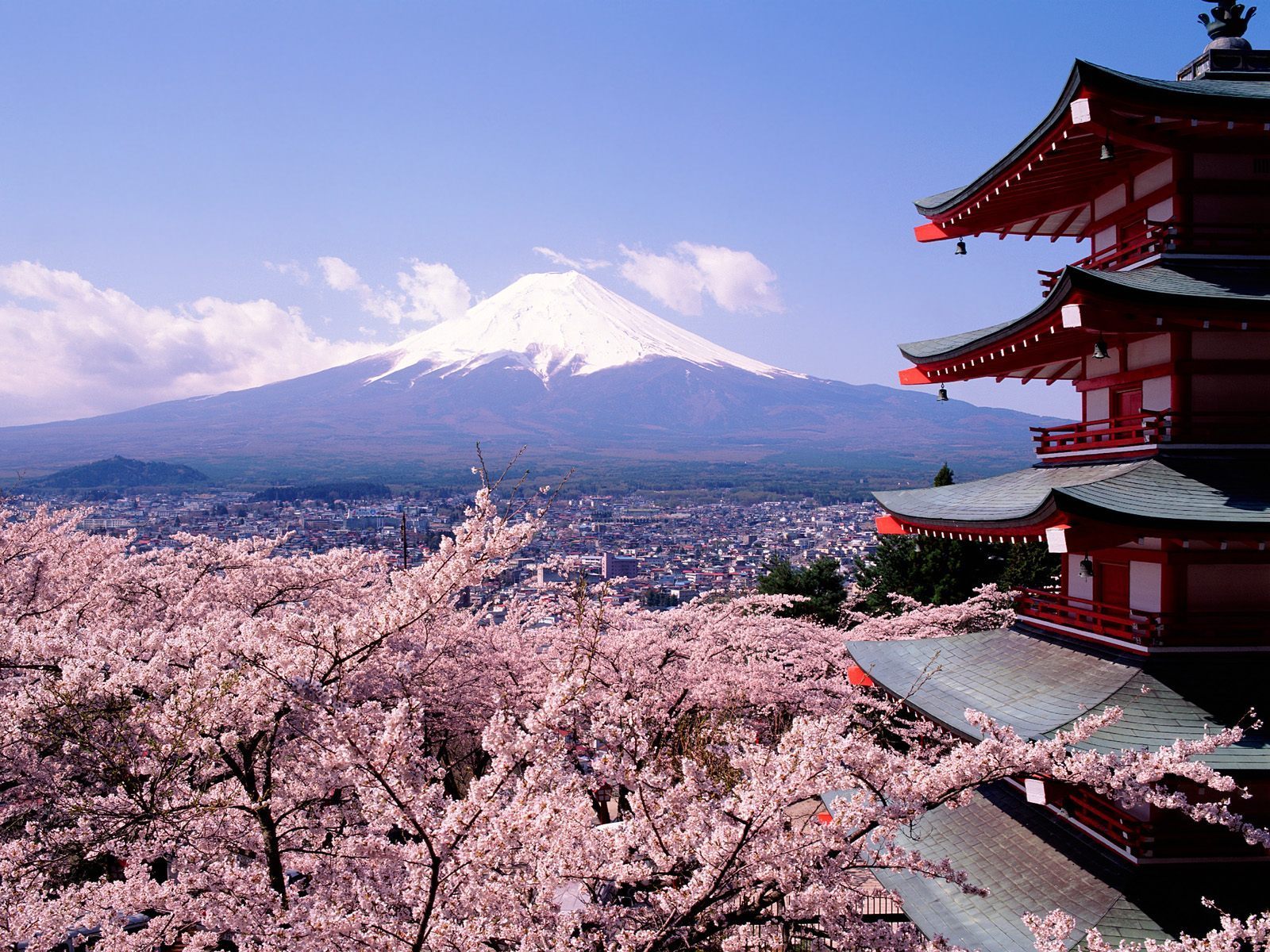
Hanami, or literally the act of viewing flowers in English, is the Japanese traditional way of enjoying the awe-inspiring beauty of flowers. In this case, the flowers that are viewed are almost always cherry blossoms, sakura in Japanese, or plum blossoms, ume in Japanese. From the end of March to early May, sakura bloom all over Japan, and around the first of February on the island of Okinawa. The blossom forecast, sakura zensen in Japanese meaning literally cherry blossom front, is announced each year by the weather stations, and is watched carefully by those planning hanami as the blossoms only last a week or two. In modern-day Japan, hanami mostly consists of having an outdoor party or picnic with lots of friends and family or even random other hanami viewers that were met on the travel to hanami beneath the sakura during the day or at night. The hanami celebrations usually involve eating and drinking, and playing and listening to music. Some special dishes are prepared and eaten at the occasion, like dango and bento, sake is commonly drunk as part of the festivity.


Hanami at night is called yozakura, night sakura in Japanese. In many places such as Ueno Park temporary paper lanterns are hung for the purpose of yozakura. On the island of Okinawa, decorative electric lanterns are hung in the trees for evening enjoyment, such as on the trees ascending Mt. Yae, near Motobu Town, or at the Nakijin Castle

A more older form of hanami also exists in Japan, which is enjoying the plum blossoms, or ume in Japanese, instead, which is narrowly referred to as umemi, plum viewing in English. This kind of hanami is popular among old generations of people, because they are more calm than the sakura parties and gatherings, which usually involve younger people and can sometimes be very crowded and noisy.


 Hanami festivities have become popular outside of Japan as well, and are now also celebrated in other countries. Smaller hanami celebrations take place in Taiwan, Korea, the Philippines, and China. Hanami also has become popular in the United States. In 1912, Japan gave 3,000 sakura trees as a gift to the United States to celebrate the nations' friendship. These trees were planted in Washington D.C., and another 3,800 trees were donated in 1965. These sakura trees continue to be a popular tourist attraction, and every year, the National Cherry Blossom Festival takes place when they bloom in early spring.